Skip to main content Skip to page footer

Good reasons for wood pellets

THESE BENEFITS ARE OFFERED BY PELLETS FROM LEAG

Modern pellet heating systems and heat generators with pellet technology can be used in almost any area - from single-family homes to manufacturing industry. By switching to pellets, you benefit from these advantages.

EU ETS II: CO2 costs

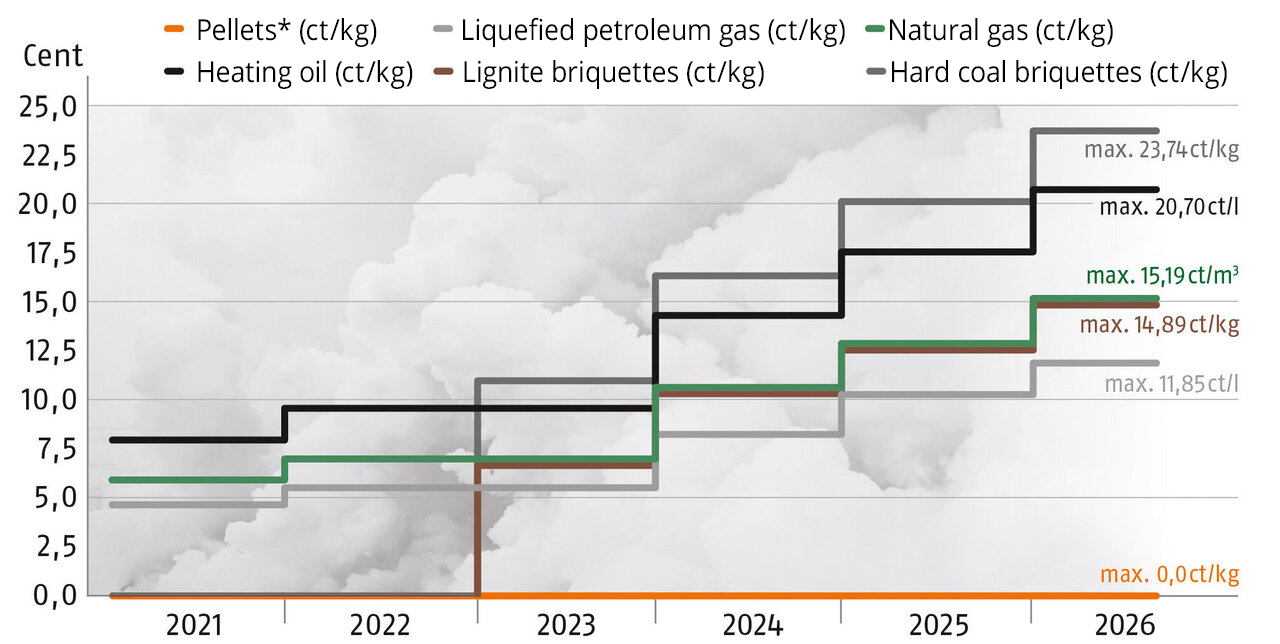
From 2027, the European Union (EU) will introduce Emissions Trading System 2 (ETS 2). This system will put a price on CO₂ emissions from fossil fuels – i.e. natural gas, heating oil and coal. This will gradually make fossil fuel heating more expensive across Europe, while renewable alternatives become more economically attractive.

ETS II is part of the European Fit for 55 package and is intended to ensure that the EU becomes climate neutral by 2050. For many homeowners and energy suppliers, this means that CO₂ costs will become the new reality.

Which fuels are covered by ETS 2?

The following fuels are covered by ETS 2:

  • Natural gas
  • Heating oil
  • Coal
  • Liquefied petroleum gas (LPG)
  • Petrol & diesel (in the transport sector)

Electricity (still covered by EU ETS 1) and renewable energies such as wood pellets, solar heat, geothermal energy and heat pumps are not affected.

Who exactly is affected by ETS 2?

ETS 2 is not aimed directly at private households, but at those who place fossil fuels on the market: Gas suppliers, heating oil dealers and other fuel suppliers must purchase a certificate for every tonne of CO₂ placed on the market. They pass on these additional costs to consumers via the energy price.

The result: heating with fossil fuels will become noticeably more expensive – year after year.

CLIMATE-FRIENDLY

Pellets burn CO₂-neutrally, i.e. when they burn, they release exactly the same amount of CO₂ that the tree previously absorbed. Pellets actively avoid emissions from fossil sources.

ECONOMIC

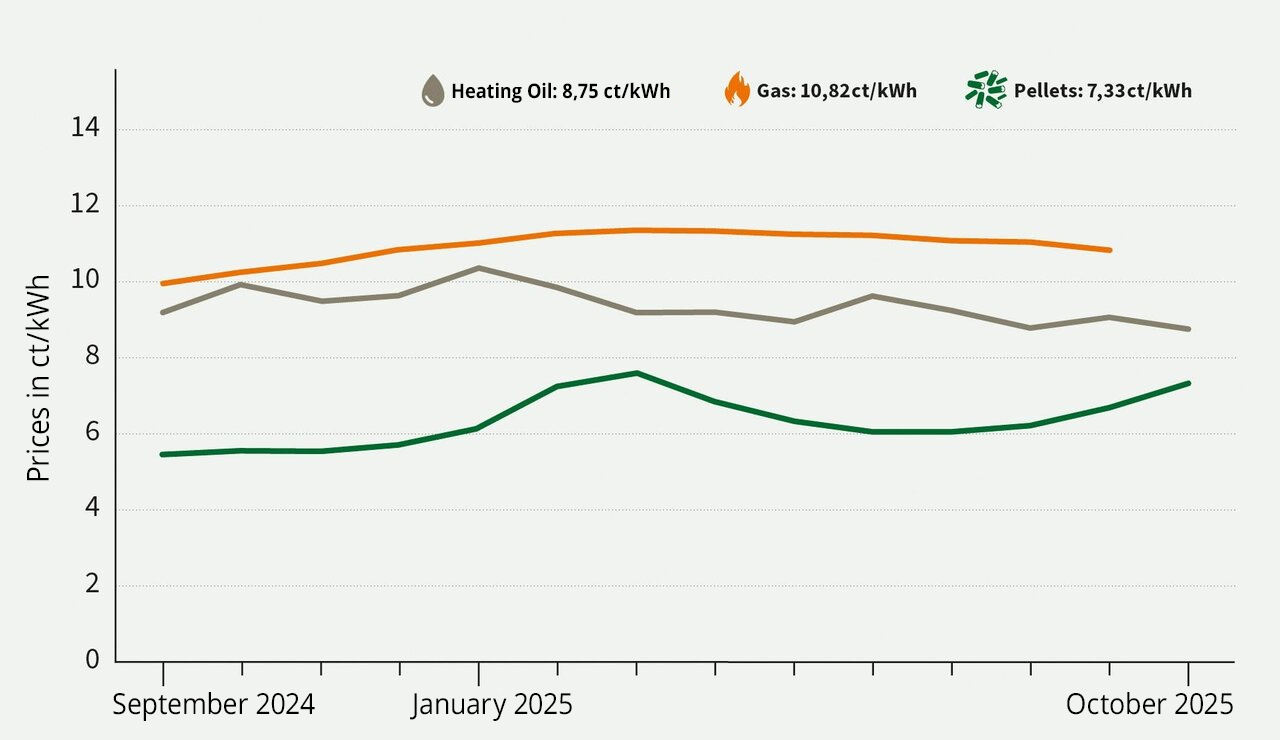
The price of pellets has been significantly lower than that of oil and gas for years. Due to the CO₂ pricing of fossil fuels, they will become more expensive in the coming years.

SECURE SUPPLY

As a leading producer with four pellet plants in Germany, we offer our customers optimum security of supply. Thanks to regional raw materials, we are independent of geopolitical risks.

SUSTAINABLE

100% of our wood comes from sustainable forestry. We use residual materials from sawmills and timber harvesting as raw materials. We are certified in accordance with the Sustainable Biomass Program (SBP).

HIGH QUALITY

Pellets can be used efficiently and with low emissions. Unlike wood chips and logs, pellets are characterized by consistently high quality and easy handling.

EFFICIENT

Modern pellet boilers are highly efficient and offer maximum ease of use. Established and proven solutions ensure a risk-free changeover.

RELIABLE

Wood pellets can be stored for an extremely long time without any loss of quality. Regardless of whether the sun is shining or the wind is blowing: with your pellet tank, you are safely stocked up - with pellets as a reliable energy source.

HOME

When using wood pellets, the added value remains in the region. This strengthens the local economy, makes it independent of crises and secures employment and prosperity.


Mann und Frau vor dem PC freuen sich über niedrige Kosten für Pellets

What are the advantages of pellets?

The future! Environmentally friendly and affordable heating with modern pellet heating. All information on the functionality, components, and costs of pellet boilers and more.

Mann freut sich über neue Pelletheizung

Smart heating solutions for businesses

Get out of rising CO2 costs, procurement risks, and uncertain price forecasts for fossil fuels and future electricity.Master the heat transition with state-of-the-art pellet systems!

Price development of wood pellets:
What is the cost of pellets compared to other fuels?

Comparing the cost of wood pellets per kWh with other fuels such as heating oil or natural gas, the balance is consistently positive: over the last 10 years (2013-2023), the price advantage of pellets over heating oil was 24.23%. Compared to natural gas, the fuel costs of pellets were even 27.15% lower.

For combustion plants with a thermal output of more than 20 MW, the European Emissions Trading System (EU-ETS I) applies.
Price Forecast:
CO2 costs for fossil fuels are rising

Paar vergleicht Kosten von Pellets und Gas am PC

Order securely and conveniently

Buy pellets now!

Frequently asked questions about wood pellets and their advantages in comparison

20.11.2025

A comparison with the costs of oil and gas shows that wood pellets have been significantly cheaper than fossil fuels over the past 10 years. Wood pellets will not be affected by rising CO2 costs in the coming years. Unlike a heat pump, which works less efficiently at low outside temperatures and requires a lot of electricity, the heat balance of a pellet heating system is less dependent on future electricity prices. Market mechanisms of supply and demand and functioning competition also apply to wood pellets.

To avoid temporary price peaks, we generally recommend early pellet purchases outside of the heating season and optimal use of storage capacity.

20.11.2025

Yes, pellet heating systems are a future-proof technology as a virtually CO2-neutral heat solution, and their installation is accordingly subsidized. To achieve ambitious climate goals and limit global warming, a rapid exit from fossil fuels is necessary. In addition to other renewable heat solutions such as heat pumps, geothermal energy, direct electrification, or green gases, the efficient use of wood and other biomass is an important component in the success of the heat transition. The major advantage of pellet applications is their high market maturity, cost efficiency, and relatively easy replacement with fossil fuel heating technologies.

With an assumed lifecycle of a pellet heating system of around 25 years, wood pellets offer a good, future-proof heat solution in many areas of application and create time that new technologies need to reach market maturity. 

20.11.2025

Like any heating solution, the use of wood pellets has its advantages and disadvantages: Compared to a gas or oil heating system, the pellet heating system has higher initial investment costs. This is due in part to the fact that in addition to the actual boiler, costs for the pellet storage and conveyor system are incurred. This also requires more space, for example, compared to a gas heating system or a district heating connection.

The major advantage is low fuel costs, no CO2 pricing, no radiator replacement, and extensive insulation and renovation work in existing buildings are not necessary, high energy efficiency even at low outside temperatures, no noise protection issues, and low dependence on future electricity prices and grid stability.

20.11.2025

Wood pellets offer a number of advantages over oil and gas. Wood pellets have a better climate balance: they burn almost CO2-neutrally and come from renewable raw materials. Pellets are characterized by higher price stability, as they are less dependent on global crises and world market fluctuations. Another plus is the government subsidy: grants and tax benefits can be used for the installation of a modern pellet heating system. Pellets offer more independence: 

Your regional production reduces your dependence on imports. Pellet stoves are convenient: The modern systems are automated and efficient.

20.11.2025

The exact amount of wood pellets you need per year depends on several factors, such as the size of the living space, the insulation of the building, your heating behavior, and the efficiency of your heating system. To get a rough estimate, you can use the following rule of thumb: for every liter of heating oil or cubic meter of natural gas you have used so far, you need about 2 kilograms of wood pellets. 

20.11.2025

Classic firewood and fireplace wood are characterized by high fluctuations in moisture, calorific value, ash content, weight, and volume.

Since firewood is usually sold by volume, e.g. as a cubic meter (Srm) or cubic meter (Rm), the question of how much energy you get for your money is never easy to answer. Whether in a wood-burning stove or a wood-fired boiler, using firewood always involves more manual effort and less ease of use. There are also compromises to be made in terms of efficiency and emissions behavior of wood-fired boilers. REKORD wood pellets, on the other hand, are characterized by a consistently high, constantly monitored product quality. Due to their high energy density and bulk density, they require less storage space than firewood. Pellet boilers have a high degree of automation and a high level of ease of use. In comparison, modern pellet boilers are also characterized by high efficiency and low emissions. 

WOOD PELLETS VS. OIL?

Wood is a renewable, regenerative raw material and energy source with a living carbon cycle.

We use by-products from sawmills and logging operations for our pellets – resource-conserving and in accordance with strict sustainability rules, so that the oil can remain in the ground!